
Glass Sweet Jar vs Food-Grade PET: Which Is Right for You?
Glass sweet jar or food-grade PET? Compare materials, lid types, sizes and uses to find the right sweet jar for your home, event or gift.
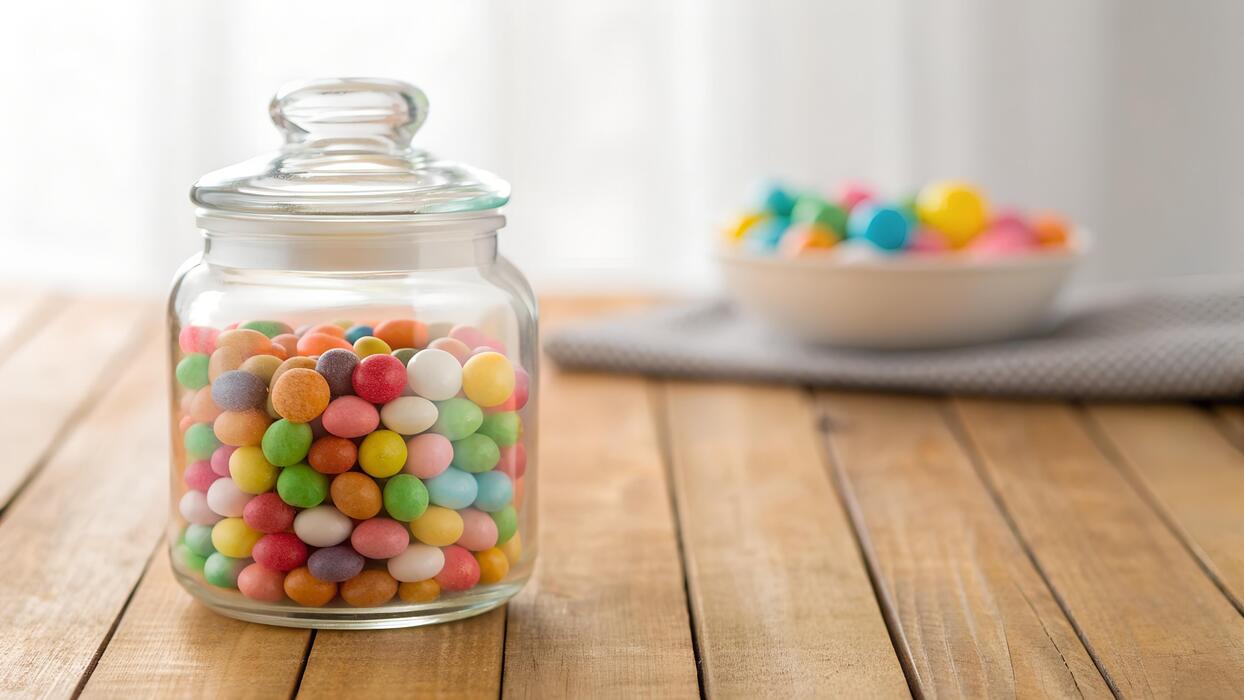
Here's the thing: the phrase "glass sweet jar" gets searched thousands of times a month, and most of the results just show you product listings. Nobody actually explains the trade-offs. Glass versus PET, wooden lids versus sealed plastic, 500ml versus a litre-sized jar. These choices matter more than you'd think, especially if you're buying for a wedding, a party, or a personalised gift that needs to travel safely.
In short
- Food-grade PET jars offer the same Victorian aesthetic as a glass sweet jar but are lighter, shatter-resistant, and safer for events and postal gifting.
- The lid matters as much as the jar: only gasketed screw-tops or clip-tops create a proper airtight seal for keeping sweets fresh.
- A 500ml jar suits personal gifts; a 970ml jar works best as a table centrepiece or generous keepsake.
- Vegan and halal labels come from makers' own packaging, not independent testing, and may not suit severe allergies.
- Vintage glass sweet jars can be genuinely valuable collectibles, but not all antique glass is food-safe for actual storage use.
Glass Sweet Jar vs Food-Grade PET: The Core Comparison
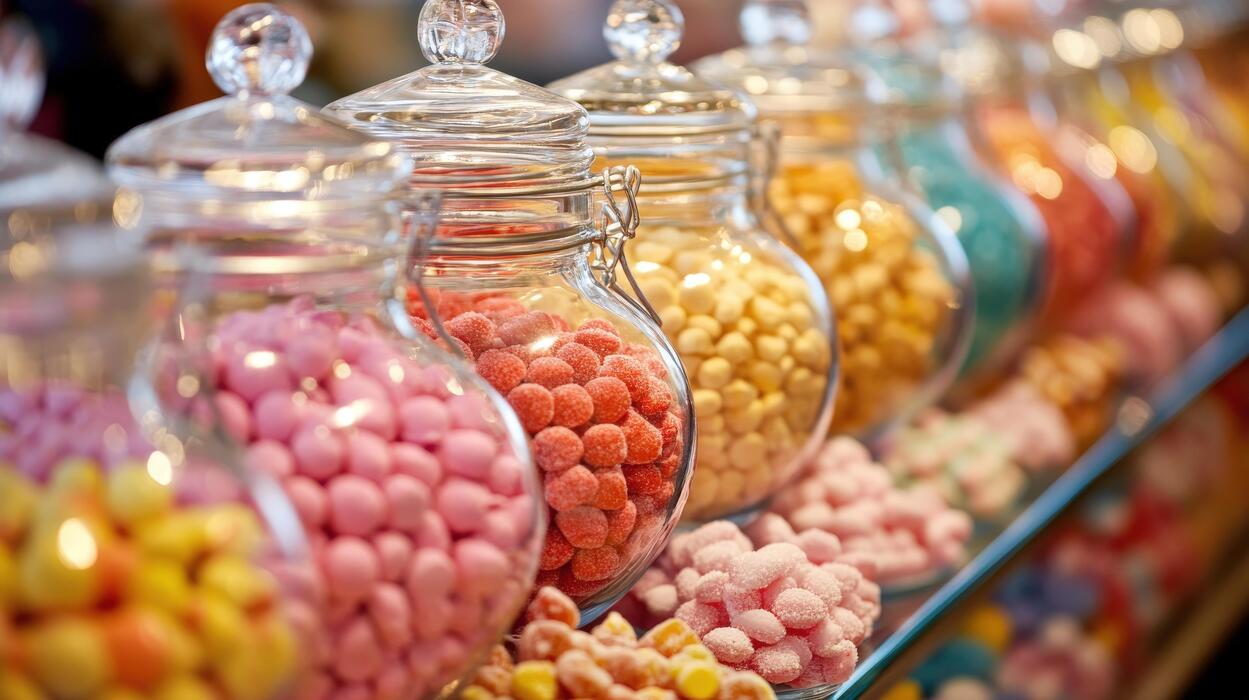
The glass sweet jar has been a fixture in British sweet shops since the Victorian era. Walk into any old-fashioned confectioner and you'll see rows of tall, wide-mouthed jars catching the light, showing off pear drops and cola cubes and those inexplicably addictive rhubarb and custards. There's a reason the image sticks.
But glass has real limitations. It's heavy. It breaks. And if you're sending a gift through the post or setting up a display at a wedding where guests are milling about with drinks, a shattered jar is a genuine hazard. Food-grade PET (polyethylene terephthalate) jars solve most of those problems without sacrificing the look. They're clear, they come in Victorian-style shapes, and they're safe for food contact.
At Vivid Delights, a family-run business based in Brentwood, Essex, every jar is food-grade PET in a Victorian style, filled by hand with sweets chosen in 100g portions. Not glass. And that's a deliberate choice, not a compromise. Every sweet in a jar shows its maker, so you always know exactly what you're getting.
| Feature | Glass Sweet Jar | Food-Grade PET Jar |
|---|---|---|
| Weight | Heavy | Light |
| Shatter risk | High | Very low |
| Clarity | Excellent | Excellent |
| Food safe | Yes (if lead-free) | Yes (food-grade PET) |
| Postal gifting | Risky without specialist packaging | Safe for standard courier |
| Event use | Requires careful handling | Ideal |
| Best for personalised gifts and events | ✓ |
Lid Types: What Actually Keeps Sweets Fresh
People get distracted by how a jar looks and forget to think about how it seals. The lid is arguably more important than the jar itself when it comes to keeping sweets in good condition.
Wooden lids look gorgeous. There, said it. A mason jar with a smooth walnut lid sitting on a kitchen shelf is a lovely thing. But wood is porous and rarely creates a proper airtight seal. If you're buying a glass sweet jar with a wooden lid for display purposes, that's fine. If you want to keep chewy sweets soft and hard-boiled sweets crisp for weeks, you need something with a gasket or a screw-top that actually seals.
- Screw-top lids with rubber gaskets: the gold standard for freshness, creates a proper seal against moisture and air.
- Clip-top lids (Kilner-style): effective when the rubber seal is in good condition, but the seal degrades over time.
- Plastic push-fit lids: convenient, reasonably airtight, easy to open repeatedly.
- Wooden or cork lids: decorative only, minimal sealing ability.
- Metal screw-tops without gaskets: better than wood, but not as reliable as gasketed versions.
Tip
If you're storing sweets that are individually wrapped, the seal matters less. Unwrapped pick-and-mix sweets are much more vulnerable to humidity and air, so prioritise a proper airtight lid for those.
Size Guide: Choosing the Right Jar Capacity
Size is one of those decisions that sounds obvious until you're standing in front of a shelf of options. A 500ml jar looks generous until you try to fit a proper mix of sweets in it. A litre jar looks brilliant but might be overkill for a single recipient.
Vivid Delights offers two sizes: 500ml and 970ml, sold as singles or as a set of four 970ml jars. The 500ml jar is a lovely personal gift, compact enough to feel considered rather than excessive. The 970ml jar is the one that turns heads on a table. It holds a proper selection, works as a centrepiece, and makes a genuinely impressive keepsake.
For context on capacity: 100g of sweets takes up roughly 200-300ml of space depending on the shape of the sweet. So a 500ml jar holds around 150-200g of a typical pick-and-mix mix, while a 970ml jar comfortably holds 300-400g with room to look abundant rather than crammed.
| Jar Size | Approx Sweet Capacity | Best For |
|---|---|---|
| 500ml | 150-200g | Personal gift, small selection, desk display |
| 970ml | 300-400g | Table centrepiece, generous gift, event keepsake |
| Set of four 970ml | 300-400g each | Wedding tables, party displays, corporate gifting |
Decorative Uses: Weddings, Parties and Events
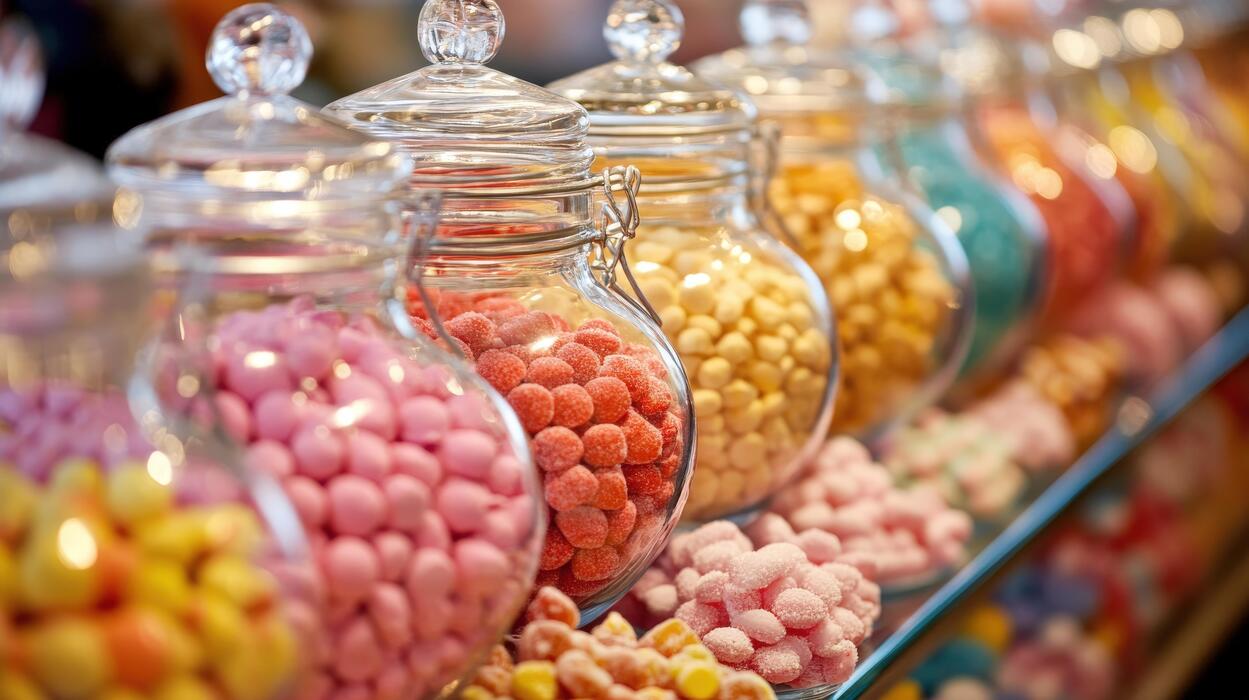
The decorative potential of a well-filled sweet jar is genuinely underrated. At a wedding reception, a row of Victorian-style jars filled with colour-coordinated sweets does something that a flower arrangement can't: it invites people to interact. Guests pick things up, peer inside, help themselves. It creates a moment.
Anyway, I'll stop waxing lyrical about the aesthetics of a jar of cola bottles. But I digress.
For weddings specifically, the question isn't just what jar to use but how to style it. Colour-coordinated sweets are the obvious move. Pink and white for a pastel theme, black and gold for something more dramatic. A personalised label sticker on the lid ties it to the occasion without needing to redesign the whole jar.
If you're thinking about a glass sweet jar display for a wedding or event, it's worth knowing that the only actual glass items at a Vivid Delights sweet cart hire are the glassware on the cart itself. The hire includes a white Victorian-style cart, pick and mix, scoops and bags, styling, set-up and collection across Brentwood and surrounding counties. You can read more about wedding sweet cart ideas to see how jars and carts work together as a display.
Note
If you're hiring a sweet cart for an event, the glassware is part of the hire package. The take-home jars guests receive are food-grade PET, which is much safer for people carrying them around at a party.
For parties and events beyond weddings, personalised cones are another option worth considering alongside jars. Cellophane cones sealed with a personalised circle sticker work brilliantly as individual favour portions, and they're sold as singles, sixes, tens, and party packs of 20, 30 and 50. Different occasions call for different formats.
Glass Sweet Jar vs Ceramic: Which Material Wins?
Ceramic jars have their fans. They're opaque, which means you can't see the contents (a genuine drawback for sweets, where visual appeal is half the point), but they look beautiful on a shelf and have a satisfying weight to them. Ceramic also tends to maintain a more stable internal temperature, which can marginally help with chocolate-based sweets in warm kitchens.
But here's the thing: for sweets specifically, you want to see what's inside. The whole joy of a pick-and-mix jar is the colour and variety on display. A ceramic jar hides all of that. You'd know there are sweets in there, but you wouldn't know if it's pear drops or gummy bears until you opened it.
Glass and food-grade PET both win on visibility. Between those two, PET wins on safety and practicality. Ceramic wins on shelf aesthetics if visibility isn't a priority, and it's a cracking choice for a kitchen canister storing something you already know the contents of.
How to Keep Sweets Fresh: Storage Tips That Actually Work
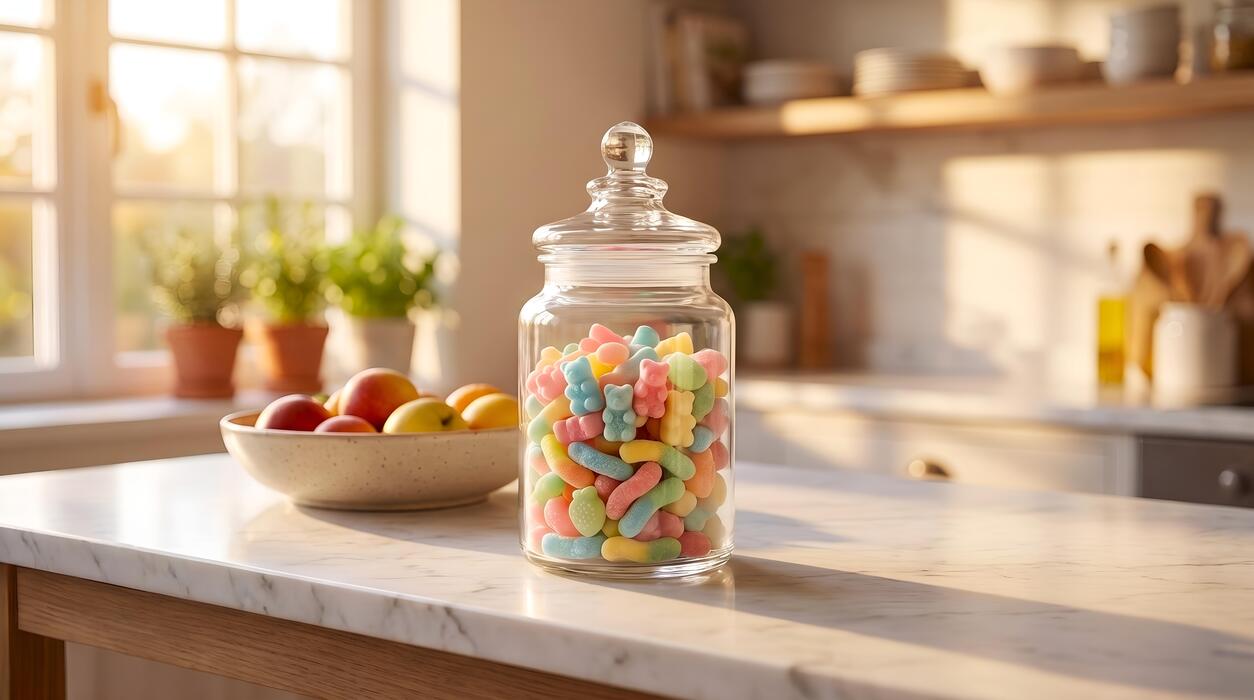
Sweets are surprisingly sensitive. Hard-boiled sweets absorb moisture from the air and go sticky. Chewy sweets dry out and harden. Chocolate blooms (that white-grey surface film) when it goes through temperature fluctuations. None of this is catastrophic, but it's annoying when you've bought a lovely jar and the sweets are past their best within a fortnight.
According to the Food Standards Agency, food businesses are required to label products with accurate best-before information2. That date on the packaging is your baseline, but storage conditions matter enormously for whether you actually reach it.
- Keep jars away from direct sunlight, which degrades colour and accelerates sugar crystallisation.
- Store at a consistent cool temperature, ideally below 18°C for most confectionery.
- Avoid storing near the hob or kettle where steam and heat fluctuate.
- Once opened, reseal immediately and consume within a few weeks for best results.
- Don't mix sweets with strong flavours (like aniseed) with mild ones in the same jar unless you're happy for the flavours to mingle.
The UK government's food labelling guidance also makes clear that producers must display allergen information prominently1. At Vivid Delights, every sweet in a jar shows its maker, which means you can trace allergen information back to the original producer. Makers stocked include Kingsway, Haribo, Vidal, Candycrave, Bubs, Fazer, Barratt, Fini, Dulce Plus, Cander, and Appletons.
The lid is arguably more important than the jar itself when it comes to keeping sweets in good condition.
Vegan and Halal Sweets: What You Need to Know
This is one area where a lot of sweet jar sellers are vague, and it's worth being direct about it. Vegan and halal tags come from the makers' own packaging, not from independent testing. That's the honest answer, and any seller who implies otherwise is stretching the truth.
Vivid Delights does offer a vegan and halal cone mix, but it's packed in a kitchen that also handles gelatine and common allergens. That means it's not suitable for people with severe allergies or for anyone who needs strict separation. Know why this matters? Because a lovely-looking jar with a vegan sticker means nothing if the production environment doesn't meet the standard required for a particular allergy or dietary need.
If you have specific allergen concerns, always contact the producer directly and check the individual sweet's packaging. Don't rely on a jar label alone.
Personalised Sweet Jars as Gifts and Favours
A personalised glass sweet jar (or its PET equivalent) makes a genuinely thoughtful gift because it combines something people actually want (sweets) with something that lasts (the jar itself). The jar becomes a keepsake long after the sweets are gone.
For weddings and events, personalised labels on the jar lid tie the gift to the occasion. Vivid Delights offers jar labels in one design across a set, or one design per table, not both simultaneously. It's a small distinction but worth knowing when you're planning a large event with multiple table themes.
For corporate gifting, a well-presented jar with a company-aligned colour scheme and maker attribution on every sweet hits a different note to a generic hamper. It's personal without being intrusive, and it's something the recipient will actually use rather than leave in a drawer.
If you're looking at favour options for a christening, baby shower, or birthday, the favours page covers the VIP keepsake jar (970ml), personalised cones, and 4-piece fudge boxes, each with their own minimum quantities and volume savings quoted in writing. Worth a look before you commit to a format.
You can also design your own personalised jar to choose your sweet selection and label style.
Vintage and Antique Glass Sweet Jars: A Brief Guide
Right, quick tangent. Vintage glass sweet jars are a proper collector's niche. Early twentieth-century apothecary-style jars, Victorian confectionery shop display jars, cobalt blue storage jars with embossed lettering: these things fetch real money at auction and on specialist marketplaces. A clear, embossed glass jar from a named British confectioner, in good condition with its original lid, can go for well over £100 depending on rarity.
What drives value? Age and provenance first. Then colour: cobalt blue, amber, and milk glass are more desirable than plain clear glass. Embossed text or maker's marks add authenticity. And condition is everything: a chip on the rim or a crack in the base knocks value down sharply. Reproduction Victorian-style jars are everywhere, so if you're buying as a collector rather than for display, do your homework.
Anyway, if you're here because you want a jar to fill with sweets rather than to display on a collector's shelf, the practical choice is a food-grade PET jar from a reputable supplier. Save the antique hunting for a Sunday market.
Heads up
Not all vintage glass jars are food-safe. Older glass sometimes contains lead, and antique lids may have degraded seals or metal components that aren't safe for food contact. If you're using a vintage jar for actual food storage, have it assessed or use it for display only.
Where to Buy Sweet Jars in the UK
For purely decorative or storage glass jars, high street homeware shops, online marketplaces, and specialist kitchenware retailers all stock a wide range. Prices vary enormously depending on size, glass thickness, and lid type.
For personalised, filled sweet jars, you want a supplier who fills by hand, knows their sweets, and attributes every product to its maker. That's a shorter list. Vivid Delights, based in Brentwood, Essex, fills Victorian-style food-grade PET jars by hand, with sweets chosen in 100g portions. The sweet jars page shows the full range of sizes and options. For those thinking about a larger event display, it's also worth reading about sweet cart hire in Essex to understand how jars and cart displays work together.
And if you're budgeting for an event and want to understand the full cost picture, the guide on how much it costs to hire a sweet cart is a practical starting point.
Allergen notice: This content discusses food products that may contain allergens including nuts, gluten, dairy, eggs, soya, and other common allergens. Always check product labelling carefully before consuming. If you have a food allergy or intolerance, contact the producer directly for up-to-date allergen information.
References
Questions
What is the difference between a glass sweet jar and a food-grade PET jar?
How long can you keep sweets fresh in a glass sweet jar?
What is the best size glass sweet jar for my needs?
Can a glass sweet jar be used for purposes other than sweets?
Are glass sweet jars with wooden lids better than plastic lids?
Where can I buy personalised sweet jars in the UK?
What makes vintage glass sweet jars valuable or collectible?
Keep reading
Sweet cart
Essex Sweet Cart Hire: The Complete Guide for Weddings, Birthdays & Events
Essex sweet cart hire explained: what's included, how to choose your sweets, coverage areas, and tips for weddings, birthdays and corporate events.
Sweet cart
Wedding Sweet Cart Ideas to Impress Every Guest in 2026
Discover the best wedding sweet cart ideas for 2026. From styling tips to sweet selection and hire vs DIY, plan the perfect candy cart for your big day.
Sweet cart
How Much Is It to Hire a Sweet Cart? A Practical UK Cost Guide for 2026
How much is it to hire a sweet cart? UK costs range from £150 to £500+. Compare packages, hidden fees, and DIY vs hire in our 2026 guide.